My Caregiving Journey
By Wendy, Retirement-Online

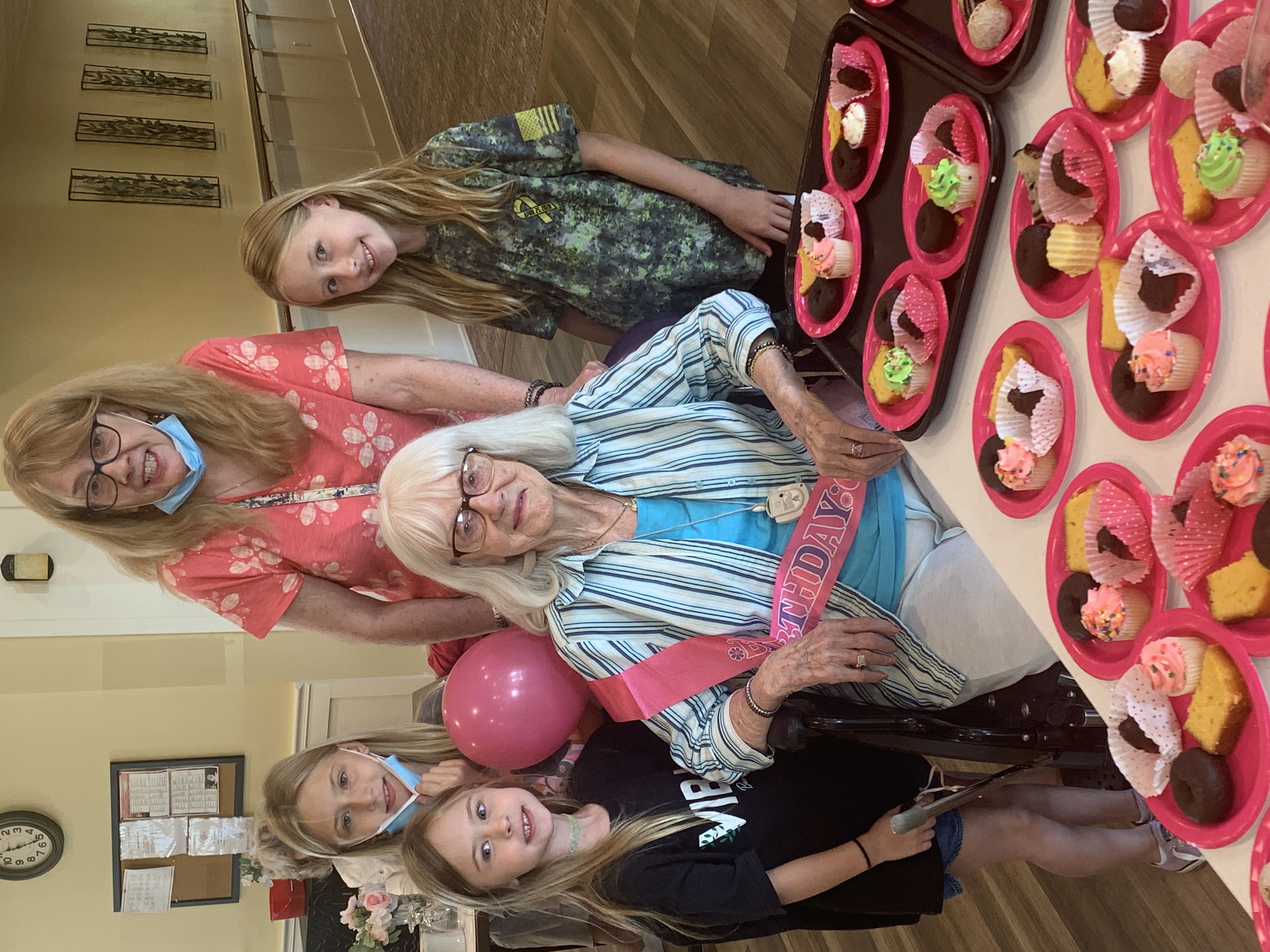
This is my mom, Jennie, at her 90th Birthday party.
Mom died at age 97 in 2024... age 97!!
I've said this before, but I retired at 55. If, God-willing, I live to even 95 (uggg!), I will live in retirement for FORTY years! I worked for 37.5 years (a lifetime to many) and now could retire for the same?
Here is my story, for the first 15 years of my own retirement... hoping others with caregiving stories will also share!
This is me (COVID times), Mom, and three great-grandaughters, Ava, Emmie, and Iyla... we had a birthday party for her while in Assisted Living!
Finally, my Caregiving Journey
I worked as a retirement manager for over 35 years. I retired in 2010 at age 55, fully expecting the next chapter of my life to be about freedom, travel, and finally slowing down.
Instead, I spent the next 15 years as a companion and caregiver to my parents.
It wasn’t planned. I probably would have worked longer if life hadn’t nudged me in another direction. But this is what happened. This became my life.
In the beginning, my parents saved me more than I saved them. I had been a workaholic and had no real idea what life after retirement looked like. They gave my days shape and purpose. Almost every day, they picked me up and we went somewhere — the mall, a few shops, a walk indoors when the weather was bad. We’d sit for coffee, sometimes lunch, just talking. Later on, I became the driver when my dad’s eyesight failed.
Caregiving became more serious with COVID. My parents were in their early 90s, and we were determined to keep them safe at home. My sister and I did all the grocery shopping and errands, and we alternated nights sleeping over. It was exhausting, but it felt necessary — protective.
About a year into COVID, my dad was hospitalized and passed away. It was devastating for my mom. Not long after, the nighttime confusions — which she had experienced occasionally before — became more frequent and more vivid.
One night, when my sister stayed over, my mom described two little boys standing beside her bed. She gave detailed descriptions of them, spoke calmly, and then turned to my sister and told her they were standing right next to her. I was grateful my sister was there that night and not me.
Another time, my mom described lace-like holes in the curtains, with plants growing in and out of them. The details were so specific, so real to her. These moments were unsettling, tender, and heartbreaking all at once. We learned quickly that correcting her didn’t help. We learned to listen, to reassure, to adapt.
That learning curve never ended. Senior life is a constant series of changes — physical, cognitive, emotional — and we were always adjusting. New products. New equipment. New routines. New ways to make everyday life safer, easier, or simply possible. Just when you think you’ve figured it out, everything shifts again.
Then came the night that changed everything.
Around 3 a.m., I woke to the sound of the Keurig running. My mom was trying to make coffee but had forgotten to put the cup under it. Coffee was everywhere. I cleaned it up, made her a fresh cup, and noticed she was dressed — makeup on, purse ready. She thought my sister and her friends were over and didn’t want to miss the conversation.
She wandered that night, so I forced myself to stay awake. Eventually, after coffee, she seemed to fall asleep and I dozed off too. That’s when I heard the crash. She had decided to clean, arms full of rags from the laundry room, and fell.
At 95, my mother broke her leg and injured her shoulder.
She was taken by ambulance, spent weeks in the hospital, then rehab, and finally moved into assisted living. She was wheelchair-bound after that. We tried walking every day, even though it was painful. Therapists came and went. Nothing really worked, likely because of her age.
Still, we showed up.
Every morning I went to see her and stayed through lunch. My sister came later and stayed through dinner, helping her settle in for the night. Yes, she lived in assisted living. And yes, we were both there daily.
We were paying just under $6,000 a month, and most days were fine — but you never really knew who would be on staff or what your loved one might need that day. We were determined she would not suffer, so we stayed involved.
There were happy moments too. My mom made friends. They colored together. They laughed about their disposable underwear. We brought in wine a few times and sat on the patio after lunch, sharing a glass and swapping stories. We decorated her doorway for every holiday. We got to know other residents. We simply showed up — again and again.
Over the years, I feel like I earned a quiet education in caregiving — not from books, but from lived experience. I learned patience I didn’t know I had. I learned how small comforts matter. I learned how love looks different when it’s tired, persistent, and steady.
My mother passed away at 97 in 2024.
It took me more than a year to find my footing again. After 15 years of caring for my parents — especially my mom — I found myself asking a question I never expected:
What do I do all day now?
I’m still figuring that out.
Add Your Two Cents here!
Do you have something to share about this?
What Other Visitors Have Said
Click below to see contributions from other visitors to this page...
Retirement, 2013 and now
I first wrote when I retired in 2013 about how retirement was so different.
Now I find myself in 2025 almost retiring again!
I had picked up a volunteer …
My journey into Retirement
HELLO TO ALL MY COLLEAGUES
After a stellar corporate career, I was retrenched around age 55 and so I bought a series of small firms (they were interesting, …
When Helping Too Much Isn’t Helping at All
Caregiving has a sneaky side.
We step in because we can. Because it’s faster. Because we’re stronger. Because we’ve done this before and know how hard …
Senior Voices - Experience retirement living through the voices of our readers!

Join Us!
Recent Articles


-
Hobbies vs Purpose in Retirement
Jul 18, 26 09:32 AM
This is one of those topics that sounds simple… until you’re living it. -
What Gives Life Meaning After Work
Jul 18, 26 09:24 AM
For many of us, work quietly carried more meaning than we realized... now what? -
Building a Sense of Direction Later in Life
Apr 18, 26 11:20 AM
You finally get time—real time—and instead of feeling free, you can feel a little… untethered.